
East Potomac Park and the holiday came from the same American spirit. Both are being remade by a president who has no use for it.
– This piece was originally posted on Substack
PATRICK GRANFIELD
When golf arrived in America, it was a game almost entirely for the elite, played at private clubs with gates to keep people out. Golf at East Potomac Park, in the shadow of the Washington Monument, has a much different identity. Barriers to entry are low; to play nine holes on a weekday costs $17.
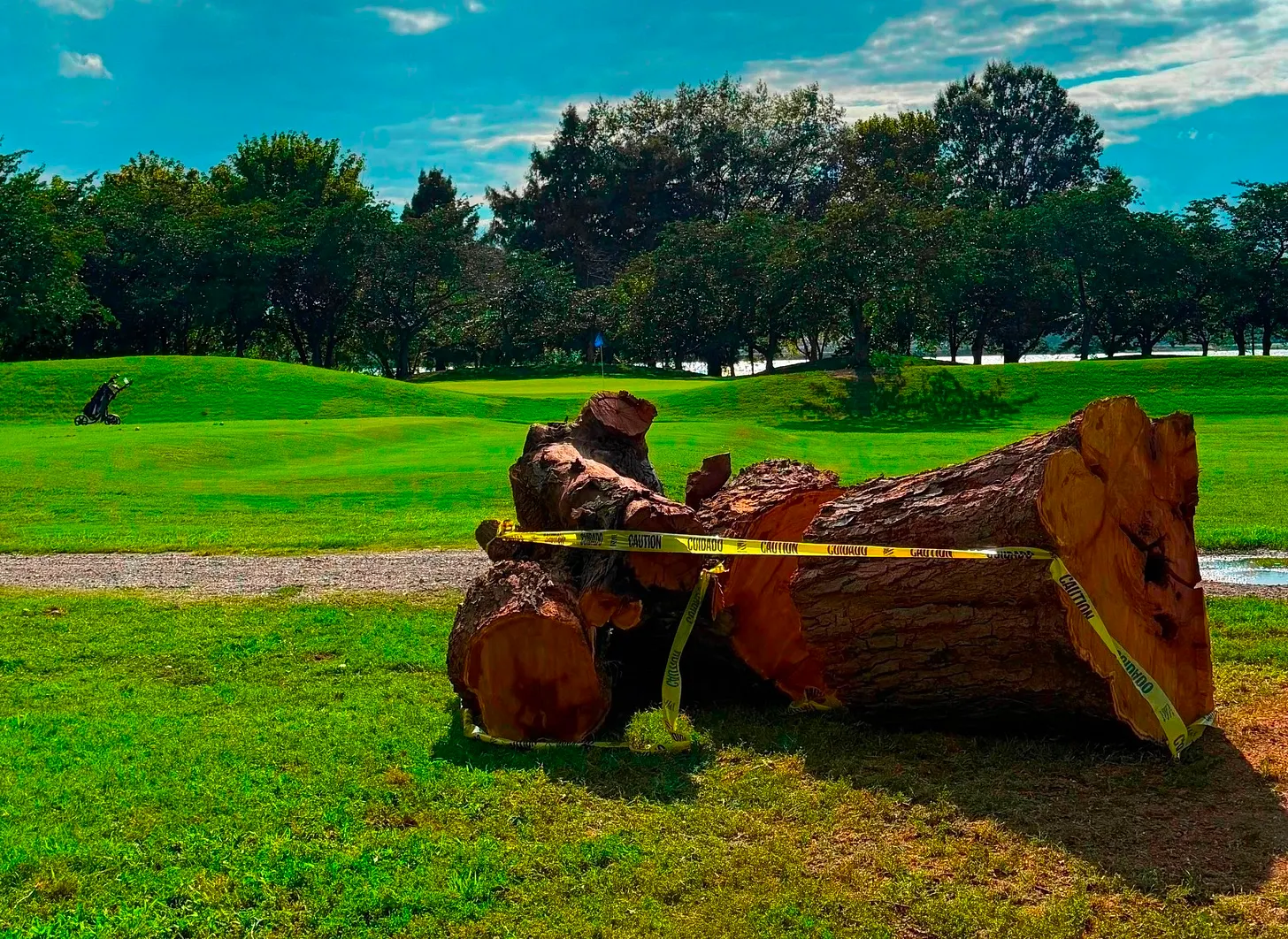
Some barriers were taken down entirely in the weeks before Labor Day, the fencing around the property removed to make way for heavy machinery. “Routine maintenance,” the Department of the Interior said. Though the president announced in late June he was taking the course over on September 1st, a date now come and gone.
In federal court on Thursday, government lawyers said required historic and environmental reviews are still ahead. Not in dispute: roughly 150 trees have come down in recent weeks. Trump is moving forward with a redesign by Tom Fazio, an architect behind many of his own golf clubs, and wants to make East Potomac an elite venue, capable of hosting major tournaments.
East Potomac Park and the Labor Day holiday are products of the same spirit, one the administration is actively dismantling. Congress made the first Monday in September a holiday after federal troops broke up the Pullman strike in 1894. Three years later, Congress ordered land dredged from the Potomac River to be “forever held and used as a park for the recreation and pleasure of the people,” creating East Potomac Park. It now includes an 18-hole and two nine-hole golf courses, along with bike paths, playing fields and picnic areas. It is a popular spot for fishing and for birders. Under Trump’s plans, East Potomac is likely to be far different.
The park is not Yosemite, the Kennedy Center, or the East Wing of the White House (though the East Wing’s rubble was left last year on East Potomac’s grounds). Its courses are not on any list of top venues in the country or region. Still, it is a place of significance to the game of golf and the country.
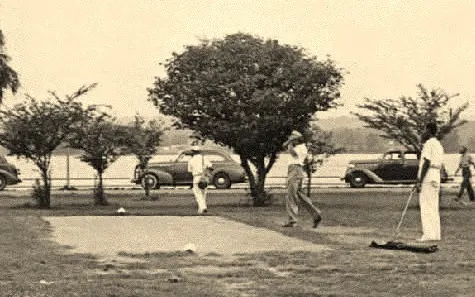
Golf has been open to the public at East Potomac since its founding in the 1920s, though in its beginnings, “public” did not include everyone. In 1941, three Black golfers, Asa Williams, George Williams, and Cecil Shamwell, challenged the course’s segregation, playing under police protection. Their act of defiance spurred Secretary of the Interior Harold Ickes to open Washington’s federally owned courses to Black players, helping set in motion a broader integration of National Park Service facilities. East Potomac is not only a place where people of different backgrounds often play together; it is also a place where the right to do so was contested and won.
Late last month, my son and I played golf there with a guy named Mike, originally from Leesburg, Virginia. By the time we reached the ninth hole, I had learned that Mike was recently engaged, that he took up golf in his early teens when he realized he was too small for football, and that he and his fiancée lived across the street from where my wife and I lived when we first moved to the area.
Mike never reached for his phone, and when I reached for one of the Modelos in my golf bag and offered him one, he turned it down, drinking from a water bottle decorated with Virginia Tech logos. Mike was in his late 20s, maybe 30, but bore little resemblance to the profiles I’ve read of men his age: isolated, perpetually online, angry about their prospects. If not for the public golf course at East Potomac, we would never have met him.
East Potomac is also where my son and I first picked up the game some nine years ago, in the first year of Trump’s presidency. Each spring we have returned. This year I wondered how many we had left; it may have only been one.
Trump has called the course “very dangerous and outdated,” but when we played in late August, I had never seen it look better. Even after a long summer, few of the fairways were burned out or patchy. The bunkers had shape to them and plenty of sand. Much of the improvement is due to the National Links Trust, the group that has managed the courses over the past several years, the team they put together, and the real money they put into them.
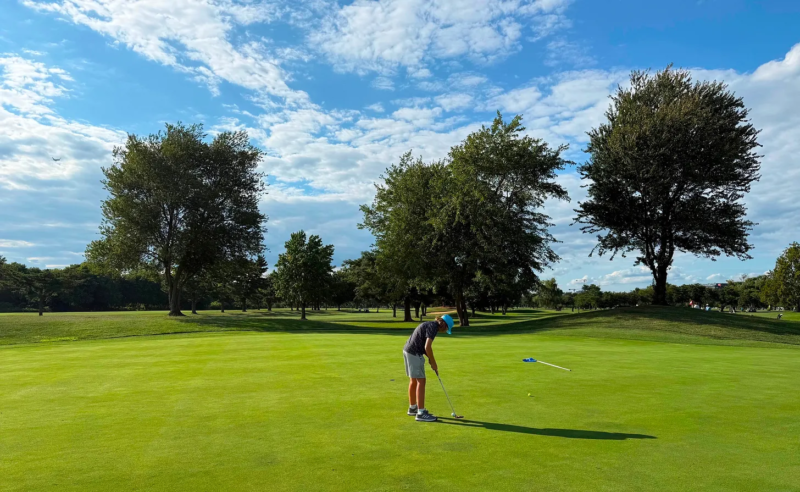
But East Potomac’s condition is a testament to something else, too. On public courses, you usually find the greens full of pitch marks, the small craters a ball leaves when it lands. Unrepaired, they can leave a green scarred for weeks. At places where everyone can play but few take ownership, you expect there to be many. At East Potomac, there were very few. The greens, as golfers say, were running true. It was the cumulative effect of players taking 15 seconds each hole to repair their own pitch marks, or someone else’s. There was a residue of care on the course, the product, perhaps, of pride and grief for a public place people know they might soon lose.
Golf was a game I resented growing up. It wasn’t because we were poor: we had everything we needed. Still, golf was a step above what was affordable. I told myself it was stuffy anyway, and in many places, it still is. The grievance kept me from seeing the game for what it teaches.
Golf doesn’t work unless players call penalties on themselves. You play the ball as it lies, with the score only meaning something if you count every stroke. Nobody has to be watching for the rules to matter.
Our tee time in August was in the late afternoon, and knowing it might be our last round on the course, we rushed to complete it. By the time we reached the 18th green, the Washington Monument was fully illuminated. My son had a putt in near total darkness, maybe five feet, to shoot 79 for the round, a milestone for a young golfer. I told him to pick it up, that I would give it to him, but he took the putt anyway. He missed, taking home an 80.
Trump claims dozens of course records and club championships, though accounts of his casual relationship with the rules have followed him for years. But rules that depend on someone else forcing you to obey them can eventually cease to be rules at all.
I didn’t appreciate these aspects of the game when my son and I first played at East Potomac with my father-in-law several years ago. I didn’t have any notion of whether the course was any good and didn’t much care. I was there to spend a few hours with my son and his grandfather, the man who taught us the game and can no longer swing a club. I still struggle to shoot a respectable score, though now I’ve played enough places to recognize a good course. On a Thursday evening along the Potomac last month, we were playing on one.
The Trump administration says a redesigned East Potomac will remain accessible and affordable. It has not said what a round will cost, who will operate the course, or addressed basic questions about the project’s scope. There is nothing undemocratic about a great golf course, and nothing inherently elitist about improving East Potomac further. The more important question is who the place will be for.
The staff I spoke to didn’t want to discuss any of it. One woman told me she was sending prayers up so that the course might still be saved. She then returned to work. I’m not going to make a judgment about her resignation. As far as a few public golf courses go, resignation can be a reasonable response. On another level, I recognized it.
After Trump was inaugurated the first time, I left my position at the Pentagon, as most appointees of the previous administration were required to do. I did some T.V., taught at Georgetown, and eventually went back to my old high school. I spent much more time with my family, which meant my son and I could play golf regularly.
I told myself the storm would pass, that things in the country would return to how they had been, myself included. But it was also a way of waiting, which can be its own form of resignation. Caring for my own corner of the world was enough, I believed. I still think there’s some wisdom in that. But loving your family is not a substitute for tending to the country your kids will inherit.
The tragedy of East Potomac is not that nobody cared about it; plenty of people did. The tragedy is that only with the end in sight did so many people come to see that caring for it was our responsibility. The pride now evident across every green, in each repaired pitch mark, may have arrived too late to save the place, and perhaps nothing could have. Still, it was a sign of what taking ownership looks like.
Public institutions often invite a kind of complacency; we believe they will always be there because they were there for us. Then someone arrives and decides they should be something else completely, remade according to his own purposes. We are now grappling with that pattern across public institutions more important than a golf course. The country’s professional civil service, the press, free elections administered in thousands of communities by ordinary citizens: all of this and more is under threat.
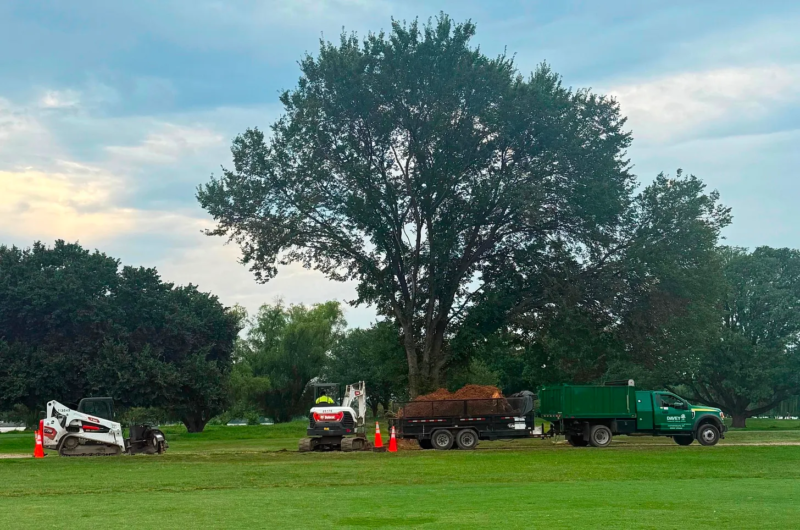
The date Trump set for his takeover has now passed. East Potomac is likely to remain open for golfers on Labor Day. But a holiday in honor of working people will arrive at a place for working people that is already being refashioned: trees cut down, fences stripped away to make room for machinery already moving through the course. The judge hearing the case said on Thursday she did not want to be handed a fait accompli, and that is a reasonable thing for a judge to want. It is not often how these things have gone. Labor Day and East Potomac were part of America’s response to its last Gilded Age. So far, amid our own, we have responded differently.
Around the tee box on the 14th hole, my son and I found the stumps of two trees, probably pines, recently cut down. By counting the rings, they had stood for most of East Potomac’s history. In the stumps you could also see some of the rot: a dark channel running through the center of each trunk. The decay was real. So was their shade.
There are things in this country that have been decaying too. Many are in need of repair, some need pruning, and others will need to be rebuilt entirely. But the answer cannot be to surrender what belongs to all of us, however flawed it may be, to whoever has the gall to decide for himself what it should be.
Still, we will have to face some facts: many of the old oaks aren’t coming back. We will need to plant new groves. You can build new places for people who would otherwise never meet to stand together on the same tee. You can make them better than what came before and hand them to the people who come after. A similar spirit gave us Labor Day and East Potomac Park some 130 years ago. It became one of America’s better habits. It must be so again.
Patrick Granfield is the former director of strategic communications for Army Secretary Eric Fanning, and a former speechwriter for Secretary of Defense Ash Carter, Secretary of State John Kerry, and Chicago mayor Rahm Emanuel. He is a 20+ handicap.


